Florida buyers face a specific inspection problem: moisture hides behind fresh paint, electrical safety devices fail silently, and air conditioning runs hard enough that duct problems are normal rather than rare. A professional inspection still decides everything — but these four tools decide which houses deserve the offer, which showing deserves a second visit, and which suspicious spot your inspector should spend their time on. All four cost less together than a single hour of any specialist's time, and each one answers a question Florida sellers would rather you never asked.
Last updated: October 7, 2026 · Prices and availability checked October 2026.
Florida Homebuyer HQ is reader-supported. When you buy through links on our site, we may earn an affiliate commission.
Compare the picks
| Product | Best for | Key spec | Price |
|---|---|---|---|
| Pin + pinless combo moisture meter | Every Florida showing | Pin + pinless modes; material modes | Check price → |
| GFCI outlet tester | Fast electrical safety screening | Checks wiring indications; trips GFCI outlets | Check price → |
| Infrared thermometer gun | Spotting duct and HVAC problems | Instant surface-temperature readings; laser aiming | Check price → |
| Water leak alarm multi-pack | New homeowners post-closing | Battery-powered; multi-pack covers every water source | Check price → |
Why these four tools, in this order
Most buyer tool lists are padded with gadgets. This one is not. Each pick below maps to the defect pattern that costs Florida buyers the most money: active moisture, failed electrical safety devices, struggling HVAC, and slow leaks that run for months unnoticed. If a tool does not catch one of those four, it did not make the list — which is why the flashlight, binoculars, and level app stayed home. They are useful (every buyer should own a good flashlight) but they are not purchases you research; these four are.
The order is deliberate too. Moisture kills Florida houses first, so the moisture meter leads. GFCI testers catch safety defects that show up on nearly every inspection report in the state. Infrared thermometers interrogate the AC system that every Florida home depends on. And leak alarms are the only tool on this list that protects the house after you buy it — which is why they close out the roundup.
How we compared them
We compared tool categories across the specs that matter to a buyer, not a contractor: what defect it finds, how fast it gives an answer at a showing, whether it marks or damages the seller's property, battery and durability, and price against the cost of the problem it detects. We weighted ease of use heavily — a tool you reach for is worth ten that stay in the drawer — and we judged every pick against Florida conditions specifically: high ambient humidity, stucco exteriors, slab foundations, and pool and exterior GFCI requirements.
An honest note: we did not buy and lab-test every tool on the market. These are researched roundups built from manufacturer specifications, professional-inspector buying guides, and aggregated owner reviews. Every claim below is about what a category of tool does and how to use it — not a promise that we personally tested your exact unit.
The four home inspection tools worth owning in 2026
Pin + pinless combo moisture meter (top pick) Best overall
The single most valuable buyer tool in Florida, and the one inspectors themselves carry. Press the pins into baseboards and window sills, or glide the pinless pad across ceiling stains and stucco, and compare readings against the same material a few feet away. A stain that reads dramatically higher than the surrounding ceiling is active; one that reads the same is almost certainly an old event. That distinction — old versus active — is the question that shapes every moisture negotiation in a Florida transaction, and a thirty-dollar meter answers it in seconds.
The combo format matters because each mode covers the other's weakness. Pinless scanning is fast and leaves no holes, which makes it showing-friendly; pin mode confirms the exact spot and gives calibrated percentage readings. Buy one with separate material modes (wood, drywall, masonry), a backlit display for dim attics, and an audible tone that rises with moisture so you can scan a wall without staring at the screen.
- scan-then-confirm workflow; pinless mode is showing-friendly; material modes cut false readings
- audible tone speeds up scanning; backlit display works in attics and crawlspaces
- pin mode leaves small holes — ask the listing agent before probing drywall
- Florida's ambient humidity raises baseline readings; comparison is the technique, not absolute numbers
Best for: buyers who want the highest-stakes answer first: old stain or active leak. Not ideal for: single-question checks — pin mode leaves small holes, so ask before probing.
 LASELION 2-in-1 Pin & Pinless Moisture Meter MS03 –Check price on Amazon →
GFCI outlet tester Best for electrical safety
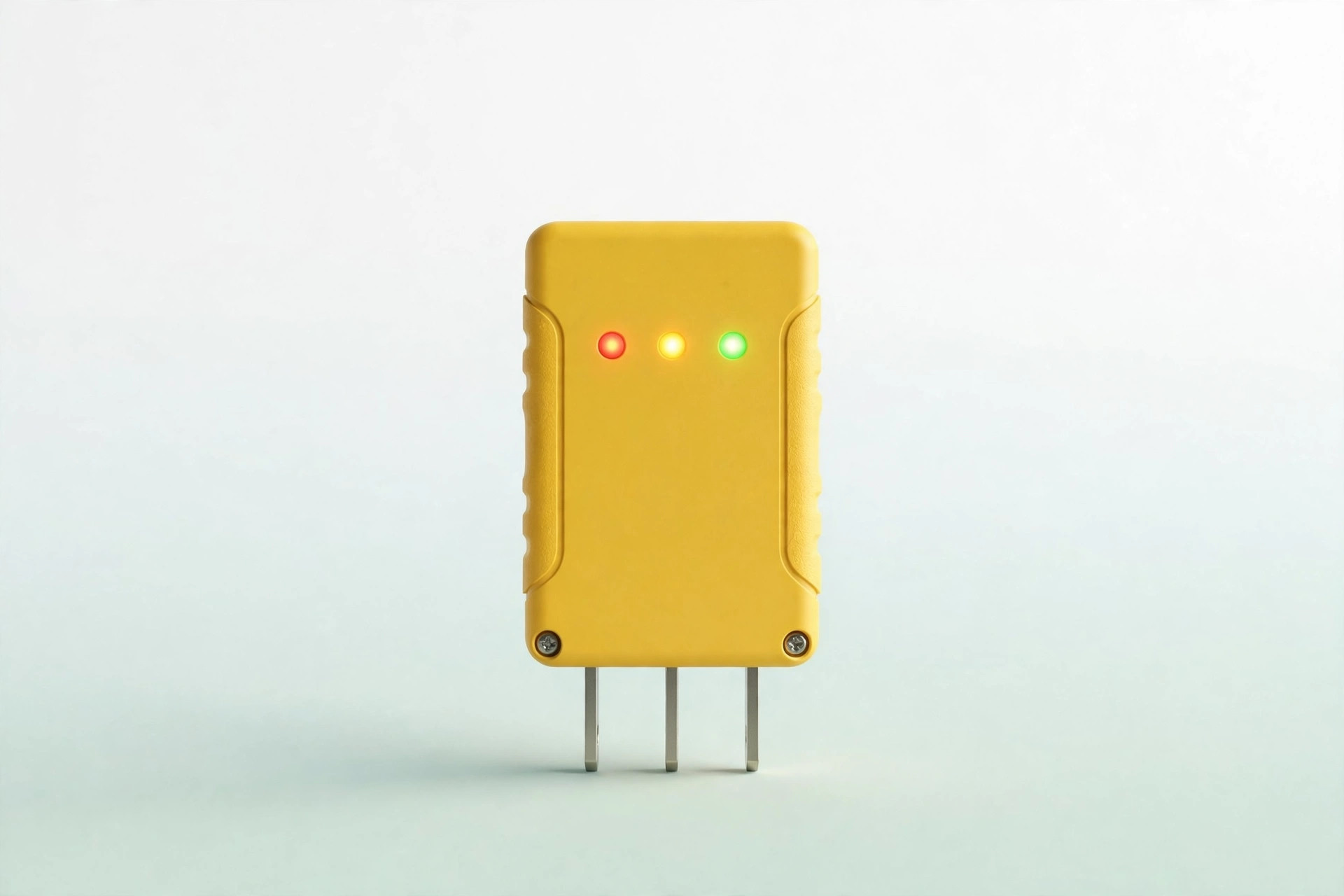
A plug-in tester that checks receptacle wiring indications and trips GFCI outlets to confirm the protection actually functions. In Florida kitchens, baths, garages, exteriors, and pool areas, working GFCI protection is a safety issue that inspectors flag on a near-weekly basis — older homes often have the outlets but the protection has failed silently years ago. Testing a handful of outlets at a showing takes two minutes and tells you whether the home's basic electrical safety devices do their job.
The technique is simple: plug in, read the light pattern, press the test button, confirm it trips, then reset. Do the kitchen, both baths, the garage, the exterior outlets, and anything within six feet of the pool. Dead or missing GFCI protection is one of the cheapest fixes in a Florida inspection report and one of the most common negotiation items — finding it yourself before the report arrives gives you leverage early.
- answers a safety question in seconds; zero damage to the seller's property
- findings are common, cheap to fix, and useful negotiation leverage
- does not evaluate the panel, concealed wiring, or grounding — it is a screening tool
- a tester cannot confirm every wiring defect; unusual readings still need the inspector
Best for: screening kitchen, bath, garage, and pool-area outlets in about two minutes. Not ideal for: evaluating the panel or concealed wiring — this is a screening tool, not an inspection.
 Klein Tools RT250 GFCI Outlet Tester with LCD Display,Check price on Amazon →
Infrared thermometer gun Best for HVAC checks
Point it at supply vents and compare temperatures room to room. A vent blowing noticeably warmer than the others suggests duct problems — disconnected, crushed, or poorly insulated ductwork in a hot Florida attic, one of the most common and most expensive hidden defects in the state. Scan ceilings for cool spots that might indicate moisture, and check the electrical panel (from a safe distance, without opening anything) for unusual heat that deserves the inspector's attention.
The key discipline is comparison, same as the moisture meter: one reading means nothing, but a twelve-degree difference between two supply vents means something. Take readings at the same distance each time, note the room, and photograph the display. Buy a gun with an adjustable emissivity setting and a laser pointer for aiming — both help you trust what you are pointing at.
- exposes duct and HVAC problems no visual check can find; instant readings
- non-invasive; safe to use at showings without touching anything
- measures surface temperature only — not moisture, not air temperature, not conditions inside walls
- readings need interpretation; a cool ceiling spot is a reason to look closer, not a diagnosis
Best for: comparing supply-vent temperatures room to room and finding dead duct runs. Not ideal for: measuring moisture, air temperature, or conditions inside walls.
 Etekcity Infrared Thermometer Laser Temperature Gun 774Check price on Amazon →
Water leak alarm multi-pack Best for after you move in
The only tool on this list that keeps working after closing day. Small battery-powered alarms sit under the water heater, behind the washing machine, under sinks, and at the air handler's drain pan — and scream the moment water touches their sensors. In Florida, where slab foundations hide plumbing, AC condensate lines clog in summer, and water heaters live in garages that nobody checks, a slow leak can run for months before anyone notices. A five-dollar alarm per location is the cheapest insurance in the house.
Buy a multi-pack so you can cover every water source at once: water heater, laundry connections, both baths, kitchen sink, and the air handler. Place them on the floor where water would pool first, test the alarm monthly with a damp finger, and replace batteries yearly. Some models connect to Wi-Fi and alert your phone — worth the premium if you travel, since the whole point is catching a leak when you are not home.
- cheapest protection per location; catches leaks months before visual damage appears
- zero installation skill; battery models need no wiring or Wi-Fi to work
- local-only models cannot alert you when you are away — consider a Wi-Fi version for travel
- sensors need periodic battery checks; a dead alarm protects nothing
Best for: new homeowners covering every water source the week they move in. Not ideal for: showings — this one protects your house after closing, not someone else’s before it.
 5 Pack Water Leak Detectors for Home, Stechro 4 LevelsCheck price on Amazon →
Our verdict
Buy the combo moisture meter first — it is the tool inspectors carry, answers the highest-stakes question (old stain versus active leak) for the price of a pizza. Add the GFCI tester immediately; it costs almost nothing and catches the defect class that appears on more Florida inspection reports than any other. The infrared thermometer earns its place the first time it finds a dead duct run in a July attic, and the leak alarms are a move-in-week purchase, not a showing purchase — buy the multi-pack before the truck is unpacked.
Honorable mentions that did not make the four: a digital hygrometer gives humidity context for your moisture readings and costs pocket change; a radon test kit is worth running during the inspection period in higher-radon pockets of the state; a water pressure gauge screws onto a hose bib in seconds and flags plumbing stress; and a strong flashlight plus binoculars belong in the showing bag even though nobody needs a buying guide to pick them.
Using these tools at a showing without overstepping
At open houses and showings, you are a guest. Non-invasive checks — GFCI tester, infrared thermometer, pinless moisture scanning — are generally fine and are normal buyer diligence. Anything that marks a surface, like moisture-meter pins, deserves a quick ask to the listing agent. During your own inspection period, with the seller's permission for the inspection, broader testing is expected.
Document everything with phone photos: the tool reading, the location, and a wide shot for context. When you can tell the inspector "the northeast bedroom ceiling stain reads 28% while the rest reads 9%, the master bath GFCI doesn't trip, and the guest bedroom vent runs twelve degrees warmer than the others," you have just handed them a briefing document — and you will get a sharper, more focused inspection in return.
Frequently asked questions
Do these tools replace the professional inspection?
No. They screen for obvious issues and direct the inspector's attention; the inspector evaluates systems, safety, and patterns you are not trained to see. Never waive the inspection because your own checks looked clean.
Which tool should I buy first if I only buy one?
The combo moisture meter. Florida's defect patterns are moisture-driven, and old-versus-active is the single most valuable distinction a buyer can make before the inspection period.
Can a moisture meter detect mold?
Not directly. Meters measure moisture content, and moisture is what lets mold grow — so a high reading flags where a problem could be hiding, not what it is. Confirming mold requires a licensed mold assessor, a different trade with its own standards.
Will sellers be offended by buyers testing things?
Non-invasive checks at showings are normal buyer diligence. Asking before probing surfaces keeps everything comfortable, and Florida listing agents are accustomed to thorough buyers.