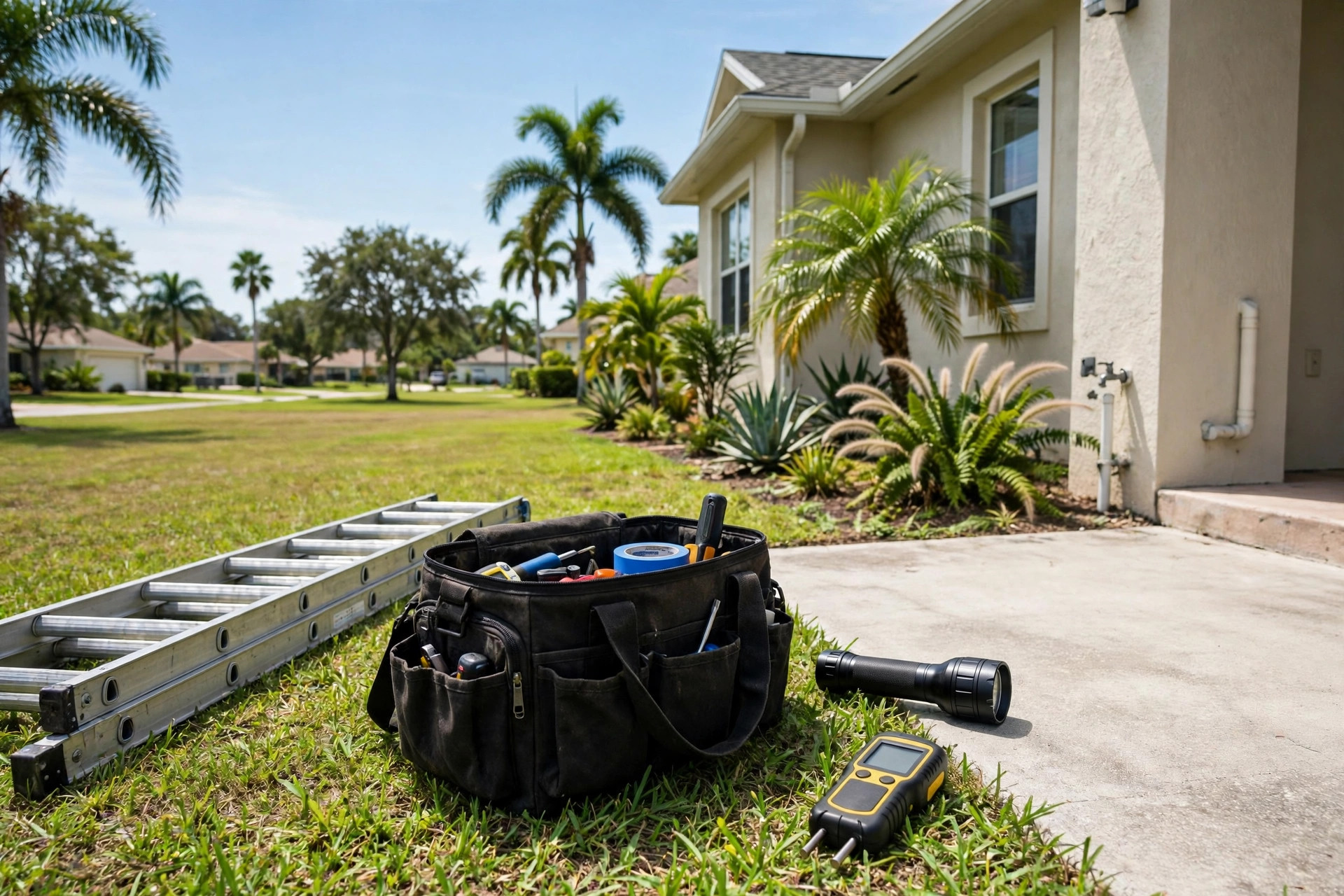
A professional home inspection is non-negotiable — these tools do not change that. What they change is the quality of your decisions before the inspection: which house gets the offer, which showing deserves a second visit, and which suspicious spot is worth asking the inspector to focus on.
Last updated: October 7, 2026.
Every tool below costs less than a typical inspection, fits in a tote bag, and is simple enough to use at an open house without looking like you are conducting your own engineering study. Florida's moisture-driven defect patterns make several of them especially valuable here.
Quick picks
In a hurry? These are this guide’s picks, in order — the full reasoning is in the sections below. Prices move fast, so check the current price before you decide.
| Product | Our take | Price |
|---|---|---|
| General Tools MMD4E Moisture Meter for Wood, Walls & Water | Top pick | Check price → |
| Klein Tools RT250 GFCI Outlet Tester with LCD Display, | Runner-up | Check price → |
| Etekcity Infrared Thermometer Laser Temperature Gun 774 | Also consider | Check price → |
1. Pin-type moisture meter
The single most useful buyer tool in Florida. Press the pins into baseboards, window sills, and drywall near plumbing, and compare readings across areas — you are looking for relative differences, not absolute numbers. A ceiling stain that reads the same as the surrounding dry ceiling is probably old; one that reads dramatically higher is active.
Limitations: it only tests the surface it touches, it cannot see inside walls, and some materials read oddly. Use it to compare, not to diagnose. Never probe someone else's property destructively — pin holes in drywall are minor, but ask the listing agent before testing at a showing.
2. GFCI outlet tester
A plug-in tester that checks receptacle wiring indications and trips GFCI outlets to confirm they function. In Florida kitchens, baths, garages, exteriors, and pool areas, working GFCI protection is both a safety issue and something inspectors flag routinely. Testing a few outlets at a showing takes two minutes and reveals whether the home's basic electrical safety devices actually work.
Limitations: it does not evaluate the panel, concealed wiring, grounding, or every defect type. It is a screening tool, not an electrical inspection.
3. Infrared thermometer gun
Point it at supply vents to compare air temperatures room to room — a vent blowing noticeably warmer than the others can indicate duct problems, which are common in Florida attics. Scan ceilings for cool spots that might suggest moisture, and check breaker panels (from a safe distance, without opening anything) for unusual heat.
Limitations: it measures surface temperature only, not moisture or air temperature directly, and readings need interpretation. A cool ceiling spot is a reason to look closer, not a diagnosis of a leak.
4. Bright flashlight or headlamp
The cheapest tool with the highest return. A strong light held at an angle across walls reveals patched areas, uneven drywall, and water staining that overhead lighting hides. In attics and crawlspaces it is essential — which is exactly why you want your own, so you are not dependent on the inspector's.
At showings, shine it along baseboards, inside sink cabinets, and across ceilings. Five minutes of raking light finds more than thirty minutes of casual looking.
5. Water pressure gauge
Screws onto an exterior hose bib in seconds and reads the home's water pressure. Readings far above the normal residential range stress supply lines, water heaters, and fixtures — and Florida homes on wells or with aging plumbing benefit most from the check. Abnormally low pressure can indicate supply restrictions or hidden leaks.
Limitations: one reading is a snapshot. Pressure can vary by time of day and municipal supply, so treat odd results as a question for the inspector, not a conclusion.
6. Binoculars for the roof
You cannot and should not climb a seller's roof. But from the ground with binoculars, you can spot lifted shingles, cracked tiles, patched areas, deteriorated flashing, and debris-filled valleys — the exact visible defects that affect insurance eligibility in Florida. Do this before the inspection so you can ask the inspector to pay attention to specific areas.
Pair the ground view with a look at the underside: in the attic, a flashlight reveals staining on the roof deck that the exterior view missed. The combination is surprisingly effective.
7. A simple marble or level app
Set a marble on hard floors in several rooms. If it consistently rolls the same direction, the floor slopes — worth noting, not worth panicking over, since many Florida slab homes have minor settlement. A smartphone level app does the same job for counters and sills. Consistent, directional slope across a large area is what earns a mention to the inspector.
How to use these at a showing without overstepping
At open houses and showings, you are a guest. Non-invasive checks — flashlight, binoculars from the yard, GFCI tester, thermometer — are generally fine. Anything that marks surfaces, like moisture-meter pins, deserves a quick ask to the listing agent. During your own inspection period, with the seller's permission for the inspection, broader testing is expected.
Document everything with phone photos: the tool reading, the location, and a wide shot for context. When you can show the inspector "the northeast bedroom ceiling stain reads 28% while the rest of the ceiling reads 9%," you have just made their job — and your report — better.
What these tools cannot do
They cannot see inside walls, under slabs, or into sealed systems. They cannot evaluate structural adequacy, confirm code compliance, or substitute for the inspector's experience pattern-matching hundreds of homes. Think of them as better eyes, not a second opinion — the professional inspection still happens, and it still matters more than anything you find yourself.
The 20-minute buyer walkthrough routine
Bring the kit to a second showing and work this sequence. Exterior first: binoculars on the roof — lifted materials, cracked tiles, patched flashing — then grading and drainage around the foundation, looking for slope toward the house and staining at the base of walls.
Inside, room by room: raking flashlight across ceilings and walls for stains and patches; moisture meter on baseboards near plumbing walls and under windows; GFCI tester on kitchen, bath, garage, and exterior outlets; thermometer on supply vents comparing room to room. Open the electrical panel door (just the door — never remove the cover) and look for rust, scorching, or obvious amateur work.
Attic and garage: flashlight on the roof deck underside for staining, a look at duct condition and insulation depth, and the water heater's age sticker and drain pan. Twenty focused minutes with tools beats an hour of casual wandering, and your photo log becomes the inspector's briefing document.
Red flags your tools might catch
Certain findings should change your plans, not just your notes. Active moisture at multiple locations, widespread electrical issues like dead GFCI protection throughout, water pressure far outside the normal range, or roof damage visible from the ground across large areas — any of these means the house deserves extra scrutiny, a specialist evaluation, or a price adjustment before you commit.
Bring these findings to the professional inspection explicitly. Inspectors work from what they can see in a limited window; a buyer who says "the master bath GFCI doesn't trip, the guest bath ceiling reads 24% moisture, and the west roof slope has lifted shingles" gets a sharper, more focused inspection than one who says "everything looked fine to me." Your tools do not replace expertise — they direct it where it matters.
Frequently asked questions
Should I bring tools to every showing?
No. First showings are for feel and layout. Bring the kit to second showings and serious contenders — that is when screening for deal-breakers pays off.
Can a moisture meter detect mold?
No. It detects moisture, which is a condition mold needs — not mold itself. Elevated readings mean "investigate further," and mold assessment is a separate specialty.
Will sellers be offended by buyers testing things?
Non-invasive checks at showings are normal buyer diligence. Asking before probing surfaces keeps everything comfortable, and listing agents in Florida are accustomed to thorough buyers.
Do I still need a professional inspection if my own checks find nothing?
Absolutely. Your tools screen for obvious issues; the inspector evaluates systems, safety, and patterns you are not trained to see. Never waive the inspection because your own checks looked clean.