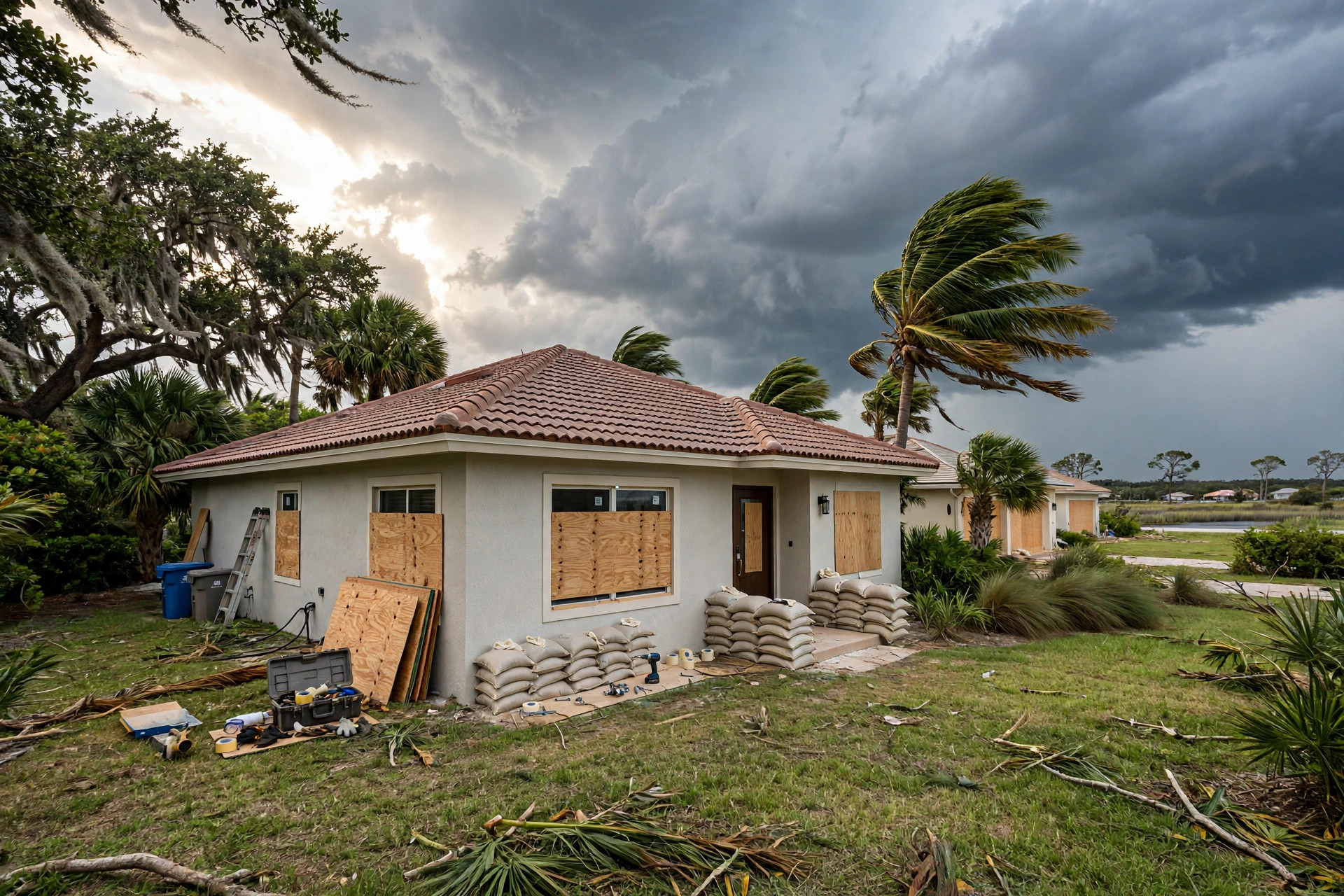
New Florida homeowners consistently make the same mistake: treating hurricane preparation as a last-minute shopping trip. When a watch goes up, water sells out in hours, batteries vanish, and gas lines stretch for blocks. The homeowners who ride out storms comfortably bought everything months earlier, when shelves were full and prices were normal.
Last updated: October 7, 2026.
This is the permanent household supply list — the things a Florida homeowner should own every June 1st, maintained year to year. It assumes you may shelter at home or evacuate; the core list serves both, with notes where they diverge.
Quick picks
In a hurry? These are this guide’s picks, in order — the full reasoning is in the sections below. Prices move fast, so check the current price before you decide.
| Product | Our take | Price |
|---|---|---|
| Jackery Explorer 300 Portable Power Station,292Wh | Top pick | Check price → |
| NOAA Weather Radio AM FM, AA Battery Radio for Power | Runner-up | Check price → |
| Consciot 1000LM Battery Powered LED Camping Lantern, 4 | Also consider | Check price → |
Water: one gallon per person per day, minimum seven days
The standard guidance is a three-day supply; Florida experience says seven. After a major storm, stores may not restock for a week, and municipal water can be under boil notices. For a family of four, that is 28 gallons — bulky, but non-negotiable. Store-bought jugs are fine; rotate them yearly since plastic degrades in garage heat.
Add a portable water filter or purification tablets as backup. They weigh nothing, cost little, and cover the scenario where stored water runs short. Do not count on filling the bathtub at the last minute — if you lose water pressure before the storm, the tub never fills.
Food: no-cook, no-refrigeration, seven days
Assume no power and no open stores. Canned proteins, peanut butter, crackers, dried fruit, nuts, and shelf-stable milk cover nutrition without cooking. A manual can opener is the most-forgotten item on every post-storm regret list — electric openers are useless without power. Include baby formula, pet food, and any dietary-specific items for a full week; special needs cannot be improvised after landfall.
Eat the freezer first when power fails, then the fridge, then the shelf food. A cooler with ice bought before the storm extends the fridge-food window by a day or two.
Power: layers, not one big purchase
Layer 1: battery banks and lanterns. High-capacity USB battery banks keep phones alive for days — phones are your weather radio, news source, and insurance-documentation camera. LED lanterns beat candles on safety and runtime; buy several and store them with batteries removed to prevent corrosion.
Layer 2: a portable power station. These battery units run fans, charge everything at once, and power a fridge for limited hours. They charge from wall outlets before the storm or from solar panels after. For most homeowners, this is the sweet spot between extension cords and a full generator.
Layer 3: a generator — only if you commit. Generators are the most oversold hurricane purchase. They require safe outdoor placement far from windows (carbon monoxide kills every season), stabilized fuel stored safely, regular test runs, and enough capacity for what you actually need. An unused, unmaintained generator is an expensive garage ornament. If you buy one, learn it in May: start it, run it under load, and know your fuel math.
Light, communication, and information
A NOAA weather radio with battery and hand-crank power works when cell towers fail — and they do fail. It is the single most reliable information source during the storm itself. Add a battery-powered or hand-crank radio as backup, plus a whistle for each family member (for signaling if trapped) and a fully charged power bank dedicated to the radio and phones.
Headlamps deserve special mention: storms mean working in the dark — checking the breaker panel, the attic hatch, the garage. A headlamp keeps both hands free, which a flashlight cannot.
Documents: waterproof, portable, photographed
Homeowners insurance policy, flood policy if separate, photo inventory of the home's contents, IDs, and the home inspection report — in a waterproof bag or container, plus phone photos of everything stored in cloud backup. After a storm, the adjuster's first questions are about documentation; "it was in the filing cabinet that flooded" is a bad answer.
Photograph every room before season each year. It takes twenty minutes and is the single highest-value insurance preparation a homeowner can do.
Home protection supplies
If your home has shutters or panels, the supply is the hardware: verify every panel, bolt, and wing nut is present and labeled before June. Missing hardware discovered during a watch cannot be replaced — stores sell out of exactly these parts. A cordless drill with charged batteries speeds deployment enormously.
Sandbags are of limited use — they do not stop flooding, only redirect minor water — but a few at door thresholds are cheap insurance. More valuable: know your evacuation zone and flood zone before season, and decide your personal evacuation trigger (storm category, zone order, or earlier) in calm weather, not under a warning.
Medical, pets, and kids
Seven days of prescriptions — refill before June, since pharmacies close and restock slowly. First-aid kit with wound care supplies, since post-storm cleanup injuries are common. For pets: a week of food and water, carriers, leashes, vaccination records, and medications; shelters require carriers and records. For kids: comfort items, diapers, formula — stress is lower when routines hold.
Evacuation vs. sheltering: the supply split
If you evacuate, the list compresses to documents, medications, valuables, pet supplies, and 72 hours of road food and water — plus a full tank of gas maintained from June onward, since stations run dry. If you shelter at home, you need the full seven-day list above. Decide based on your zone, the home's construction (see our shutters vs. impact windows guide), and official orders — never on optimism.
First-time buyer mistakes to avoid
Buying during the watch. Everything costs more and half of it is gone. May shopping is the entire strategy.
Storing fuel unsafely. Gasoline needs stabilizer, sealed approved containers, and outdoor ventilated storage — never in the house or attached garage near ignition sources.
Forgetting the "after." The storm is half the event. Post-storm supplies — tarps, a battery chainsaw or handsaw for small limbs (leave large trees to professionals), work gloves, and contractor trash bags — matter as much as pre-storm ones.
No cash. Card readers need power and networks. Keep small bills on hand before season.
Maintaining the kit year to year
Supplies expire. Every May, spend one hour on maintenance: check expiration dates on food, medications, and batteries; test the weather radio and every lantern; replace stored water; run the generator under load for 20 minutes; confirm the shutter hardware box is complete and bolts turn freely. Replace anything corroded — battery terminals in Florida humidity corrode fast.
Update the document photos and the room-by-room photo inventory at the same time. Insurance adjusters compare pre-storm documentation against damage, and a current inventory with timestamps is the difference between a smooth claim and a disputed one. Store a copy with a trusted contact outside the storm zone as well as in the cloud.
Frequently asked questions
When should I buy hurricane supplies?
May, before the June 1st season start. Florida's sales-tax holiday on hurricane supplies usually falls around this time, which is a genuine discount on exactly this list.
How much water do I really need?
One gallon per person per day for drinking and basic sanitation, for at least seven days. Pets add more. This is the item people most consistently underestimate.
Is a portable power station better than a generator?
For most homeowners, yes: silent, safe indoors, no fuel storage, and enough for phones, fans, lights, and short fridge runs. Generators win only for multi-day whole-home needs — if you will maintain one properly.
Should renters-turned-buyers keep their old evacuation plan?
Update it. Your new home's evacuation zone, flood zone, and construction type may differ completely from your rental's. Check both zones for the new address before your first season.