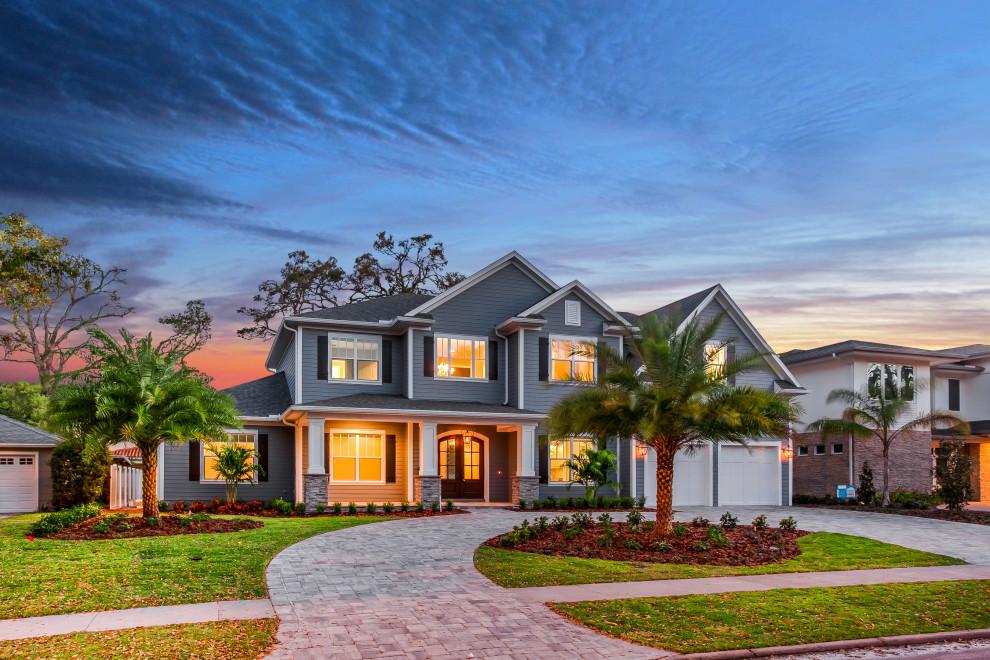
Florida homes spend a lot of time empty: workdays, vacations, and for snowbirds, entire summers. Meanwhile the threats are specific — water intrusion during storm season, air conditioners failing in August heat, and the usual burglary risk concentrated in predictable patterns. A small set of smart devices covers all three, and most install without an electrician.
Last updated: October 7, 2026.
This guide prioritizes by Florida value, not by gadget appeal. Buy in this order and each device earns its place; buy in reverse order and you own expensive toys watching an unprotected water heater.
Quick picks
In a hurry? These are this guide’s picks, in order — the full reasoning is in the sections below. Prices move fast, so check the current price before you decide.
| Product | Our take | Price |
|---|---|---|
| GoveeLife Upgraded Smart Water Leak Detector 1s with High | Top pick | Check price → |
| Ring Battery Doorbell 2K (newest model) Retinal 2K with | Runner-up | Check price → |
| Philips Wi-Fi Smart Deadbolt Lock, Keyless Entry Door Locks | Also consider | Check price → |
1. Water leak sensors — the Florida essential
Water is the most expensive and most common threat to Florida homes: supply-line failures, water-heater ruptures, washing-machine hoses, air-handler condensate overflows, and slab leaks. A $25 sensor under each risk point sends a phone alert the moment water touches it — often hours or days before you would notice.
Place them at the water heater, under every sink, behind the washing machine, at the air handler and its drain pan, and near the refrigerator water line. Choose sensors with loud local alarms in addition to phone alerts, and models with replaceable batteries you will actually change. For snowbirds, a sensor with automatic water shutoff valve capability is the single best upgrade available.
2. Video doorbell
Package theft and "knock" burglaries follow the same logic everywhere, and a video doorbell with two-way talk covers both while documenting visitors. In Florida, prioritize models rated for high heat and humidity — cheap doorbells cook on a sun-facing entry — and consider battery vs. wired based on your existing doorbell wiring, which the inspection report will have documented.
Mount it where it sees the approach path, not just the door itself. And check HOA rules before adding visible exterior devices; some associations restrict camera placement and doorbell models.
3. Smart locks
Rekeying after closing is mandatory — you do not know who holds copies of the seller's keys. A smart lock solves this permanently: change codes instead of cylinders, grant temporary codes to contractors and guests, and get entry logs. For Florida's rental-heavy markets, this is also the difference between an easy Airbnb setup and a key-management headache.
Choose a lock with a physical key backup. Electronics fail, batteries die, and during hurricane-season power outages you do not want your entry dependent on anything but a key you hold.
4. Smart thermostat with humidity sensing
Florida's enemy is not just heat — it is humidity. A thermostat that reports and controls indoor humidity lets you hold the home at a safe, efficient setpoint while away: cool enough to prevent mold (generally below 60% relative humidity), warm enough to keep the electric bill sane. Snowbirds can monitor the empty house all summer and catch an AC failure before it becomes a mold remediation.
This is also an insurance-adjacent win: documented humidity control supports the "well-maintained home" story if a moisture claim ever gets questioned.
5. Exterior cameras
Two or three well-placed cameras cover entries, the driveway, and the backyard/pool area — the pool camera doubles as a safety monitor for homes with kids. Wired cameras are more reliable than Wi-Fi in Florida's stucco-and-block construction, which murders wireless signals; if you go wireless, test signal strength at each mount point before committing.
Heat-rated housings matter for sun-exposed mounts. And again, check the HOA: camera placement rules are common in Florida communities.
6. Smart lighting for the empty house
Randomized lighting schedules are the cheapest burglary deterrent there is. Smart bulbs or switches on a vacation routine make an empty house look occupied for a fraction of a monitored system's cost. Focus on street-visible rooms and the entry — full-house automation is unnecessary.
Monitored vs. self-monitored
Professional monitoring adds a monthly fee and a call center that dispatches on alarms. Self-monitoring — phone alerts you respond to — costs nothing monthly but depends on you noticing and acting. For full-time residents, self-monitoring plus good sensors is usually enough. For snowbirds leaving a house empty for months, professional monitoring or a trusted local contact is worth serious consideration, because a water alert at 2 a.m. is useless if nobody can reach the house.
Florida-specific installation notes
Stucco and block walls complicate mounting and Wi-Fi. Use masonry anchors, and plan camera and sensor placement around signal realities, not wishes.
Heat kills batteries. Outdoor devices in direct Florida sun eat batteries far faster than rated. Prefer wired power for sun-exposed mounts, and check battery devices quarterly.
Storm season. A whole-home surge protector at the panel (an electrician job, worth doing) protects every smart device at once. After any nearby lightning strike, verify cameras and the doorbell still function — surge damage is cumulative and sneaky.
Power outages. Most smart security goes dumb without power and internet. A small UPS on the router and modem keeps alerts flowing through short outages; for hurricane season, that is the difference between monitoring and silence.
What not to buy first
Skip the robot vacuum, the smart fridge, and the voice-controlled everything until the protective layer above is done. Security and water monitoring prevent five-figure losses; convenience gadgets do not. There is also no need to commit to one ecosystem on day one — start with the highest-value devices and standardize later.
The $200 starter setup
If the full list feels like too much at once, this is the minimum effective purchase order. First, a four-pack of water leak sensors for the water heater, washing machine, kitchen sink, and air handler — roughly $60 to $80. Second, a video doorbell, roughly $100 on sale. That is the entire starter kit: water watched, entry watched, phone alerted.
Month two, add the smart lock when you rekey — you are paying for a lock either way, so the incremental cost of smart over standard is small. Month three, the humidity-sensing thermostat, ideally before the first summer. Cameras come last, once you have lived in the house long enough to know which angles actually matter.
Privacy and data: what the devices know
Security devices collect sensitive data — who comes and goes, when the house is empty, video of your family. Choose brands with local storage options or clear data policies, use unique strong passwords plus two-factor authentication on every device account, and keep firmware updated. A camera with a default password is a vulnerability, not security.
Be a good neighbor with cameras: angle them at your own property, not into adjacent windows or yards. Florida has no shortage of neighbor disputes that started with a camera pointed the wrong way, and some HOAs write camera-aim rules specifically because of them.
When to buy: timing the purchases
Do not buy everything at closing. Leak sensors and the doorbell go in during the first week — water and entry are day-one risks. The smart lock comes with rekeying, the thermostat before the first full summer, and cameras after you have lived in the house long enough to know the blind spots. Spreading purchases across three months also spreads them across sale cycles; doorbells and locks discount heavily around major sale events.
Keep every receipt and the installation dates. If a device ever matters in an insurance claim — a leak sensor's alert log proving you responded promptly, a camera's footage of a break-in — the purchase record and alert history are evidence.
Frequently asked questions
Do smart home devices lower homeowners insurance?
Some carriers offer small discounts for monitored security or water shutoff systems. Ask your agent specifically — the discount rarely covers the equipment cost alone, but it is a real secondary benefit.
Can I install this myself or do I need an electrician?
Doorbells, locks, sensors, thermostats, and cameras are typical DIY installs. Anything involving the electrical panel — like a whole-home surge protector — needs a licensed electrician.
What should snowbirds prioritize?
Water leak sensors with shutoff capability, a humidity-sensing thermostat, and either professional monitoring or a local contact with a key. Those three cover the risks that grow while you are gone.
Will my HOA allow cameras and smart locks?
Rules vary widely. Many Florida HOAs restrict visible exterior modifications, including cameras and non-standard door hardware. Get written approval before buying.